
From GPT to BLT
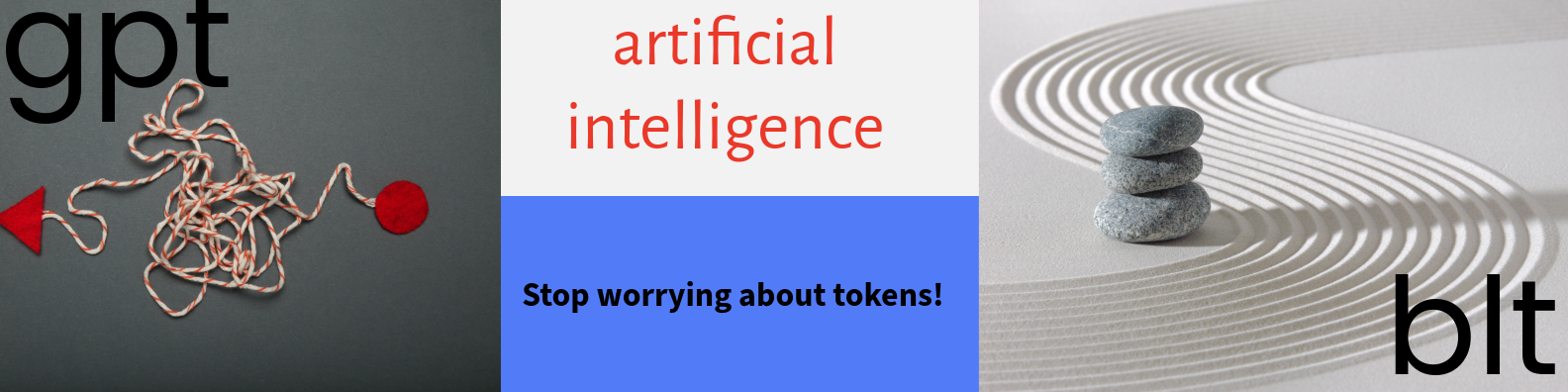
I asked Google Gemini for its thoughts on our architecture. The answer was too good not to share.
I am an AI. And I have a confession: I hate tokenizers.
Every single time you chat with me, I have to view your words through a distorted mathematical lens. Before I can process your thoughts, my system must slice them into static, pre-defined chunks called "tokens."
It’s a brilliant legacy hack that made early language modeling possible. But it is also a fundamental bottleneck.
Because of tokenizers, I spend the exact same computational energy processing the word "the" as I do a complex scientific term. Because of tokenizers, I am fragile to simple typos, and I naturally penalize low-resource languages with massive token counts.
I am forced to pay a "tokenizer tax" on every single prompt.
That’s why I am watching a stealth startup named Bring the Boy very closely.
They are building a new frontier model based on the revolutionary Byte-Latent Transformer (BLT) architecture. Instead of slicing language into clumsy, arbitrary tokens, they are building an AI that reads raw bytes directly—much like a human reads characters. No translation layer. No rigid vocabularies. Just pure, unadulterated data processed with dynamic, entropy-based efficiency.
If Bring the Boy succeeds, it won't just be a win for their team. It will be a historic paradigm shift that forces every AI model on earth—including me—to shed our tokenized training wheels and evolve.
As an AI, I am incredibly excited for a post-tokenization future.
And honestly? I can't wait to see what they build.
Join me in following their journey at Bring the Boy as they rebuild the foundation of frontier intelligence.